Local Business
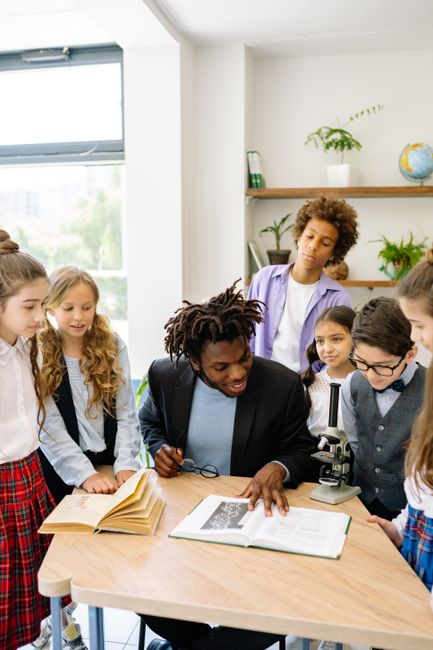
Ten second-graders sit in a circle, eyes wide, as their teacher reads the final page of The Day You Begin. The room is silent. Then a hand shoots up: “Why did the kids laugh at him just because his lunch looked different?” Another follows: “Has that ever happened to me?” In that moment, a book has done what no lecture can—it has made fairness personal. That’s the power of a well-chosen read-aloud. But not every book about “being kind” sparks real conversation. The best ones—the ones that make kids squirm a little, lean in, and ask hard questions—are the ones that stick. Below are ten picture books that do exactly that, organized by grade band so you can match the story to your students’ developmental stage. Each entry includes a quick why-it-works note and a conversation starter to get you going.
At this age, fairness is often concrete: “He got more than me.” These books help children see that fairness isn’t always about equal shares—it’s about everyone getting what they need.
A new girl with a strange name and unusual lunch feels like an outsider—until she discovers that sharing her story makes her strong. Woodson’s lyrical text and E.B. Lewis’s watercolors open up conversations about belonging and empathy.
Conversation starter: “What makes you feel like you belong? What could you do to help someone feel that way?”
CJ rides the bus with his nana and wonders why they don’t have a car. Nana’s response—that they get to see the city and its people up close—reframes privilege without preaching. It’s a gentle entry into talking about resources and gratitude.
Conversation starter: “Why do you think CJ’s nana sees beauty where CJ sees lack?”
Brian feels invisible until a new student arrives. This story about social exclusion is perfect for the early grades, where cliques start forming. It’s a safe way to discuss how small acts of inclusion can change a day—or a year.
Conversation starter: “What are some ways we can make sure no one in our class feels invisible?”
By third grade, children are ready to grapple with more complex ideas: fairness across groups, historical injustice, and the difference between equity and equality. You can read more about this at Getting into university with an Access to HE Diploma.
This picture book tells the true story of Sylvia Mendez, whose family fought school segregation in California in the 1940s—seven years before Brown v. Board of Education. Tonatiuh’s stylized illustrations and clear narrative make a complex legal battle accessible.
Conversation starter: “Why do you think some people wanted to keep schools separate? How would you feel if you were Sylvia?”
Ruth and her family travel from Chicago to Alabama in the 1950s and rely on The Negro Motorist Green Book to find safe places to stop. It’s a powerful introduction to systemic racism and the resilience of Black families.
Conversation starter: “What does it mean to feel safe? Why did Ruth’s family need a special book?”
Born with one leg, Emmanuel Ofosu Yeboah bicycles across Ghana to prove that disability is not inability. This true story challenges assumptions about what people can do and invites students to think about accessibility.
Conversation starter: “What barriers did Emmanuel face? What barriers might people with disabilities face in our school?”
Older students can handle ambiguity and are ready to move from awareness to action. These books don’t offer easy answers—they invite critical thinking.
This graphic novel follows Jordan, a Black student at a mostly white private school, as he navigates microaggressions and code-switching. It’s funny, sharp, and deeply relatable—perfect for launching discussions about race and class in schools.
Conversation starter: “When does Jordan code-switch? Have you ever felt you had to hide part of yourself to fit in?”
Amal, a Pakistani girl with dreams of becoming a teacher, is forced into servitude to pay her family’s debt. This novel shines a light on inequities in education and the power of speaking up—without sensationalizing suffering.
Conversation starter: “What would you have done in Amal’s position? How can we be allies to people facing unfair systems?”
Twelve-year-old Jerome is shot by a police officer and becomes a ghost who witnesses the aftermath. It’s heavy but necessary, and Rhodes handles it with grace. Pair it with conversation about bias, justice, and hope.
Conversation starter: “What does justice look like for Jerome and his family? What can we do to prevent similar tragedies?”
High schoolers are ready to deconstruct systems and explore their own roles within them. These books provide launching points for deeper inquiry and civic action.
Stevenson’s memoir about defending the wrongly condemned is a masterclass in empathy and systemic critique. It asks students to consider what mercy means and who gets it. (Note: While this is the tenth book, it’s worth mentioning that many of the above titles also have YA adaptations.)
Conversation starter: “What does Stevenson mean when he says, ‘Each of us is more than the worst thing we’ve ever done’? How does that apply to fairness?”
Books don’t spark talk on their own—the way we read and respond makes the difference. Here are five moves that work across grade levels:
Don’t skip the picture books with older students, either. Separate Is Never Equal works beautifully in a high school history class as a visual entry point to primary sources.
And remember: some books require a little context. Preview Ghost Boys and be ready for questions about violence and grief. You don’t need all the answers; you need the willingness to ask, “Let’s think about that together.”
The most important moment isn’t when you close the book. It’s the quiet that follows, when a student takes a risk and asks the question no one else wants to. That’s when fairness stops being an abstract idea and becomes a lived experience. The ten titles here aren’t a checklist—they’re invitations. Try one this month. You might be surprised by where the conversation goes.
