Local Business
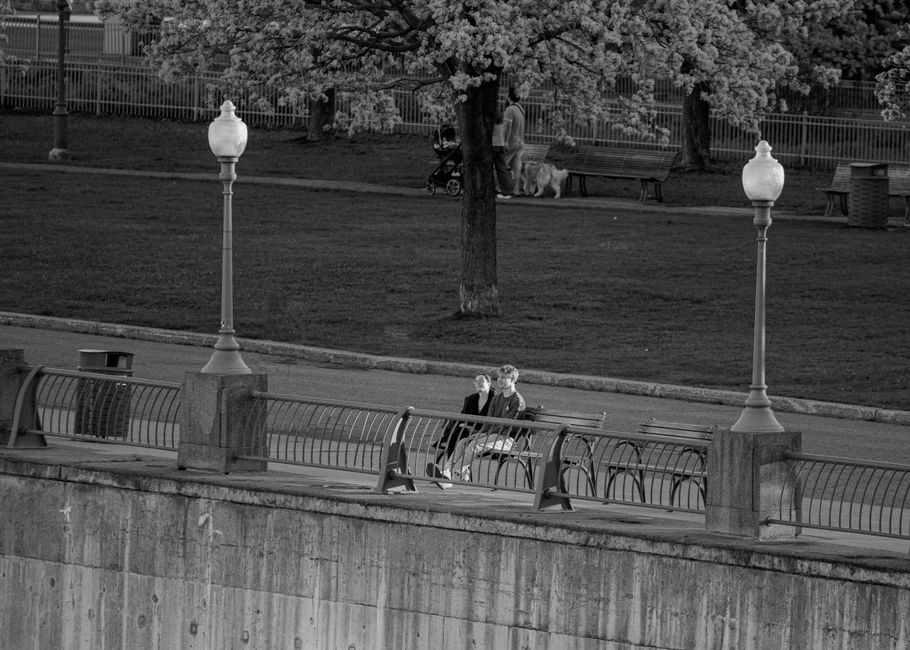
Sociologists have a term for the places that aren't home and aren't work: third places. Bars, cafes, barbershops, libraries, parks, community centers — the spots where people gather without a specific purpose, just to be around other people. Ray Oldenburg, who popularized the concept in the 1980s, argued that these places are essential to a functioning society. They're where democracy gets practiced in small ways, where strangers become acquaintances, where the lone individual finds a low-stakes way to belong. And in modern cities, they've become harder and harder to find.
The reasons are familiar. Rising rents push out the cheap, unglamorous spaces that used to serve as third places. Remote work blurs the line between home and office, leaving less need for a neutral hangout. And smartphones offer a kind of portable third place — a group chat, a feed, a stream — that feels social without requiring anyone to leave the couch. But something is lost in the trade. A screen can't replicate the particular pleasure of being in a room with other people, all doing their own thing, together.
Third places do quiet work. They give retirees a reason to leave the house. They give teenagers a place to be independent without getting into trouble. They give newcomers a way to meet people without the pressure of a dinner party. They're also remarkably democratic — in a good third place, the banker and the bike messenger sit at adjacent tables, and nobody cares. That kind of casual mixing is rare in a city that increasingly sorts people by income and profession.
Cities that invest in third places see the returns. A well-used park, a busy library, a community pool — these aren't luxuries. They're infrastructure for social life, as important as roads or sewers. Some cities have started treating them that way, funding pop-up plazas, extending library hours, and turning empty lots into gathering spaces. The results are often surprising: a parking spot converted into a tiny parklet can become the most social six feet on the block.
You don't need a city program to find a third place. You need a routine. The key is repetition — going to the same spot at the same time, often enough that you start to recognize faces. It might be a coffee shop where you read on Sunday mornings. It might be a bar where you watch the game. It might be a community garden, a chess table in the park, or the lobby of a building where you don't live but where the doorman has started nodding at you. The specific place matters less than the habit of showing up.
If your neighborhood is short on third places, consider that you might be able to help create one. Start a monthly board game night at a local bar. Organize a walking group. Put a little free library on your fence. These small interventions can snowball in ways you don't expect. The city is not a fixed thing; it's a collection of habits and spaces that people build together. Every third place started as somebody's idea. The next one might be yours.
