You don't need a Central Park to change a neighborhood — sometimes a single lot is enough.
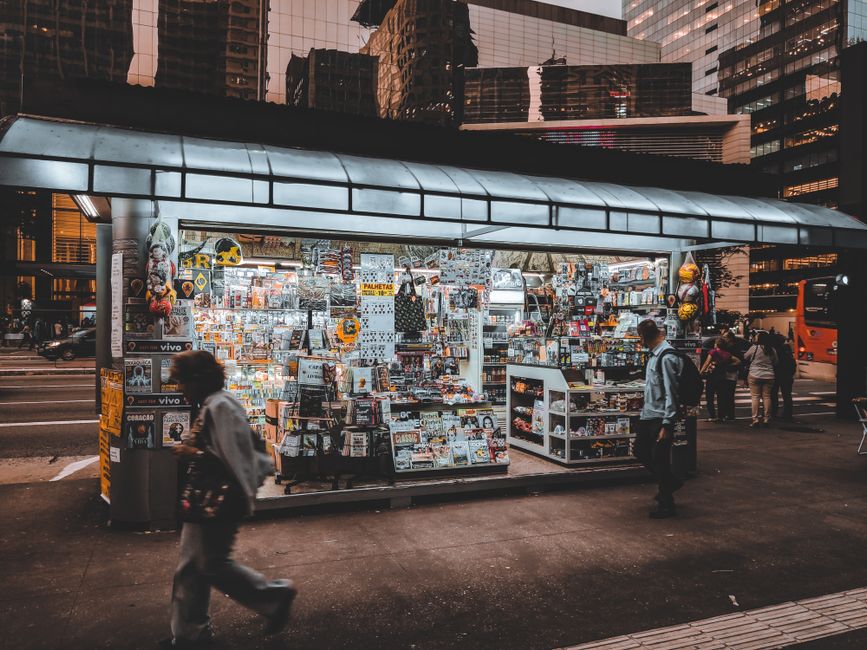
There was a time when every major city intersection had one. A green or red or slightly rusted metal box, open on one side, overflowing with newspapers, magazines, candy, cigarettes, and lottery tickets. The corner newsstand was not just a place to buy things. It was a landmark, a meeting point, a tiny fortress of print in a sea of asphalt. Today, you have to look hard to find one. But when you do, it is worth stopping.
The newsstand is a victim of obvious forces. Print circulation has collapsed. Convenience stores sell everything a newsstand sells and more. And the smartphone has made the idea of buying a physical newspaper on the way to work feel almost quaint. But the loss is not just economic. It is cultural. The newsstand was a place where information was curated by a human being, not an algorithm. The guy behind the counter knew what sold. He knew what was good. He knew what you always bought.
Step up to a surviving newsstand and you will notice something immediately: it is dense. Every inch of vertical space is used. Magazines are fanned out like a deck of cards. Newspapers are stacked in neat but precarious piles. There are racks of gum, lighters, phone chargers, umbrellas. It is not pretty in the way a boutique is pretty. It is pretty in the way a toolbox is pretty. Everything is there for a reason.
That density is also a kind of democracy. The newsstand does not care about your taste. It carries everything from the highbrow literary quarterly to the tabloid with the screaming headlines. It carries the local ethnic paper and the international fashion magazine. It carries the crossword puzzle book and the racing form. In a world of personalized feeds, the newsstand is a reminder that a healthy public sphere requires exposure to things you did not ask for.
So what do we do with the newsstand? We can start by using them. Buy a paper. Buy a magazine you would never read online. Talk to the person who runs it. Learn their name. If you own a building with a corner, consider renting it to a newsstand rather than another bank or chain pharmacy. If you are a city planner, look for ways to make the permit process easier, not harder. The newsstand is not a relic. It is a small, stubborn, deeply urban institution that still has something to teach us about how to live together.
It teaches us that not everything needs to be convenient. It teaches us that physical space matters. And it teaches us that a city is not just a collection of buildings and roads. It is a collection of small, human-scale places where we can pause, buy something small, and remember that we are part of something larger than our own private lives.
