City Culture
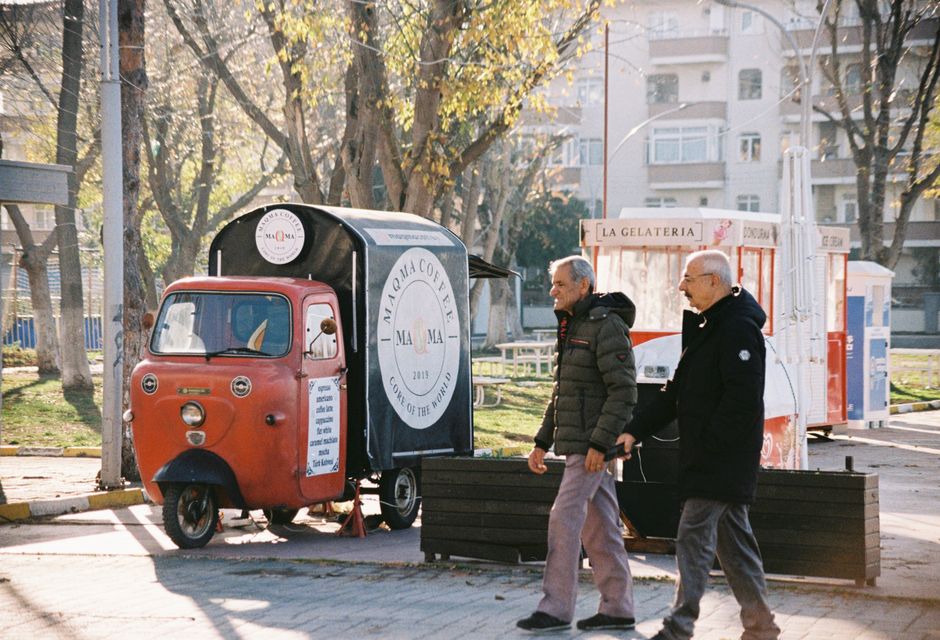
There is a particular kind of magic that happens at 7:45 on a Tuesday morning on a busy corner. It has nothing to do with the glass towers above or the subway grates below. It has everything to do with a folding table, a hand-painted sign, and a man named Sal who knows exactly how you take your coffee. The neighborhood coffee cart is not a new invention, but in the last few years it has quietly become the most important piece of urban infrastructure you have never thought to appreciate.
Unlike the polished chain cafes that line every avenue, the coffee cart operates on a different set of rules. There is no loyalty app. There is no oat milk upcharge (usually). There is no carefully curated playlist designed to make you linger. Instead, there is speed, efficiency, and a kind of gruff warmth that feels increasingly rare in a city that is always trying to sell you something. The cart is not trying to be your living room. It is trying to get you to work on time without spilling on your shirt.
Running a coffee cart is not a glamorous business. It means waking up before the sun, hauling equipment, and praying the weather holds. But it also means something that few other urban businesses can claim: direct, unfiltered connection with the people who live and work in the immediate vicinity. The cart owner knows the doormen, the nurses coming off night shifts, the dog walkers, the construction crews. They become a fixed point in a rotating cast of characters.
This hyper-locality is what makes the cart so resilient. While brick-and-mortar shops struggle with rising rents and fickle foot traffic, the cart can adapt. It can move. It can show up where the people are, whether that is outside a hospital entrance or a park gate on a Saturday morning. It is the ultimate form of urban improvisation, and it works.
But let us not pretend this is only about coffee. The cart is a social contract. It says: I will be here, and you will show up, and for thirty seconds we will acknowledge each other as human beings before we disappear into our separate days. In a city that can feel like a collection of strangers moving in parallel lines, that small acknowledgment matters more than we admit.
So the next time you pass a cart on your way to somewhere else, stop. Order something. Learn a name. You might find that the best part of your morning is not the caffeine at all, but the brief, unpolished, utterly real moment of standing on a sidewalk with someone who is glad you showed up.
